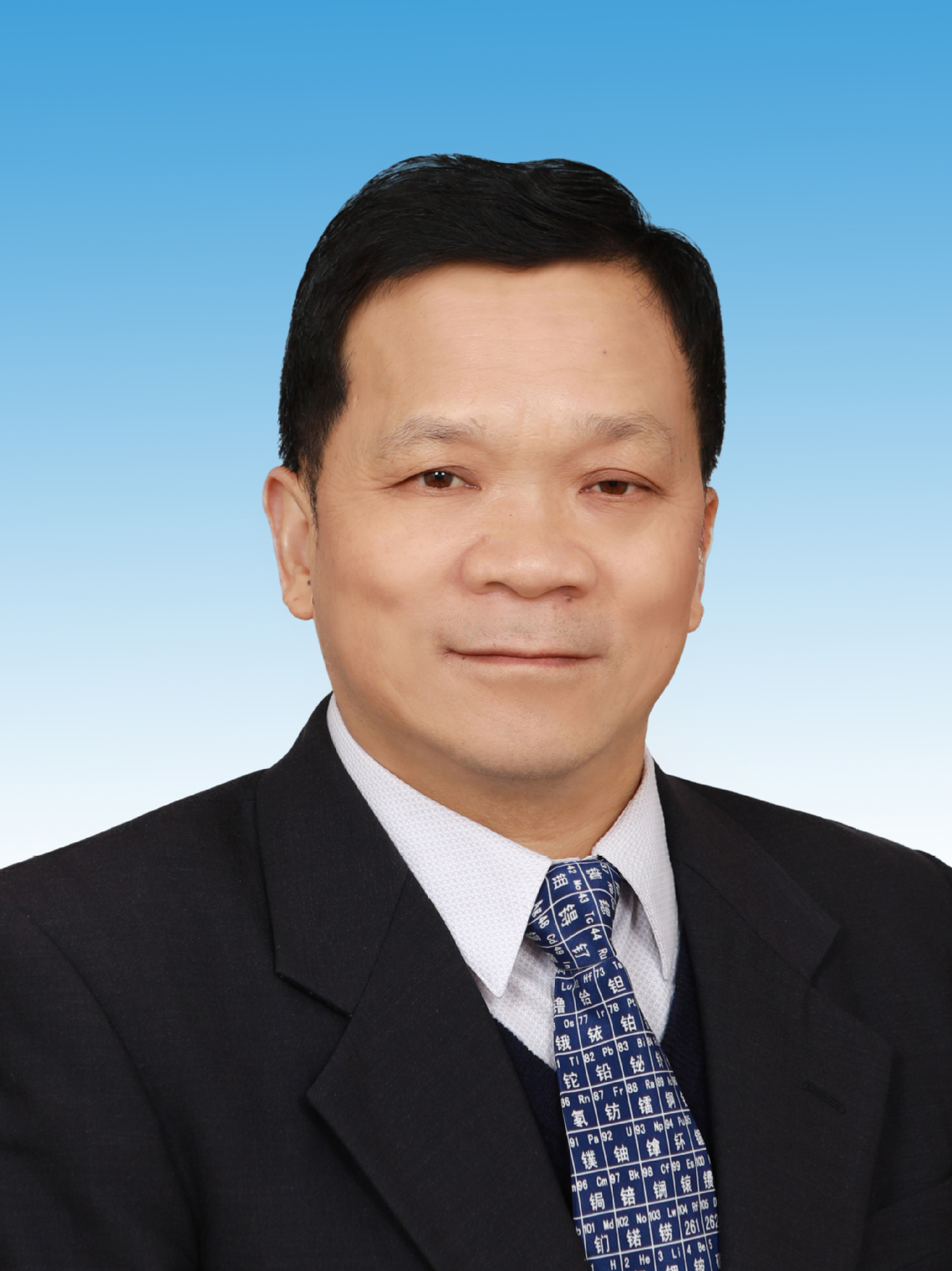
He Liangnian,Doctor degree,professor,Institute of Elemento-organic Chemistry,graduated from Nankai University
Special Talent:Chutian Distinguished Professor
Address:Weijin Rd. 94Telephone:86-22-23503878
Email:heln@nankai.edu.cn
Research Group Website: http://greenchem.nankai.edu.cn
Research Interest:Carbon dioxide chemistry, Green chemistry, Biomass conversion.
His Current research interests cover green chemistry, biomass conversion, and CO2 chemistry (2008) including CO2 activation and catalytic conversion into fuels/value-added chemicals, in situ transformation of CO2, combining CO2 capture and subsequent conversion in a carbon-neutral cycle (2011), reductive functionalization of CO2 (2017), renewable energy-driven CO2 valorization (2018), catalysis in green solvents, and green technology related to desulfurization.
In particular, He group has been developing methodologies and green processes for catalytically converting CO2 to valuable chemicals and fuels, proposing novel concepts and strategies for CO2 chemistry, for example, integrating carbon capture and subsequent conversion. Renewable energy-driven CO2 valorization in a sustainable way is one promising strategy that is an ongoing project in our group. On the other hand, Professor He are also dedicated to rational designing effective materials for CO2 capture and conversion based on mechanistic investigations. Furthermore, several CO2 conversion technologies we have developed are being applied to industrial application.
Education:
1993-1996 Institute of Elemento-Organic Chemistry, Nankai University. Received Ph.D. degree in June, 1996 (with Prof. Ru-Yu Chen).
1988-1991 Institute of Organic Synthesis, Central China Normal University. Received M. S. degree in June, 1991 (with Prof. Jing-Ling Zhang).
1980-1983 Department of Chemistry, Hanjiang Normal University, 1983 (with Prof. Xi-Feng Tang).
Academic Career:
2003- Professor, Institute of Elemento-Organic Chemistry, Nankai University, Tianjin, China.
1999-2003 Postdoctoral associate, NEDO fellow, National Institute of Advanced Industrial Science and Technology, Japan (with Prof. Toshiyasu Sakakura)
1996-1998 Postdoctoral associate, Wuhan University (with Prof. Ren-Xi Zhuo)
2011 Fellow of the Royal Society of Chemistry (FRSC)
2016 Bentham Ambassador
2018 Max-Plank-Institute lectureship
2019 Distinguished visiting professor in CSIRO (The Commonwealth Scientific and Industrial Research Organization, Australia)
2025 “Re-inventing university Y2025” Guest professor, Ministry of Higher Education, Science, Research and Innovation, ThailandOrganized Conferences:
2019, The 1st National Conference on Carbon Dioxide Utilization, Nov. 8th-10th, Tianjin, CHINA
2011, CO2 Chemistry Symposium (Virtual Meeting), March 27th, Tianjin, CHINA
Professional Memberships
2012- Series Editor, Green Chemistry and Sustainable Technology (Springer)
2013- Member, Editorial Board of Journal of CO2 Utilization
2015-2021 Editor-in-chief of Current Organic Synthesis
2015- Member, Editorial Advisory Board of Mini-reviews in Organic Chemistry
2016- Member, Editorial Advisory Board of CRC Press “Green Syntheses”
2016- Member, Editorial Board of Current Opinion in Green and Sustainable Chemistry
2018-2022 Member, Editorial Board of Chinese Science Bulletin.
2020- Member, Editorial Board of Green Chemical Engineering
2021- Member, Editorial Advisory Board of ChemistryOpen.
2022- Associate Editor of Frontier of Chemistry
2024- Member, Editorial Advisory Board of Acta Phys. -Chim. Sin.
2025- Member, Editorial Advisory Board of ChemCatChem
2025- Member, Editorial Board ofCarbon and Hydrogen
Selected Publications
(1) Yong-Kang Zhang, An-Guo Wu, Liang-Nian He*. Hydrogen Atom Transfer-Mediated N‑heterocycles Dehydrogenation Coupled with CO2 Photoreduction to Syngas. J. Am. Chem. Soc.2025, 147, 31482-31487.
(2) Fang-Yu Ren, Chaopeng Hu, Wen-Bin Huang, Ling-Hao Duan, Yun-Zhu Meng, Xiu-Lan Li, Zhi Fang, Xin-Yuan Zhao, Wen Wang, Xiang-Shuai Li, Jian Zhao, Xiang-Yu Zhang, Sheng-Li Hou, Hang Xu, Ying Shi, Prof. Liang-Nian He*, Prof. Bin Zhao*. Modulated Multicomponent Reaction Pathway by Pore-Confinement Effect in MOFs for Highly Efficient Catalysis of Low-Concentration CO2. Angew. Chem. Int. Ed. 2025, 64, e202503898.
(3) Li-Qi Qiu, Hong-Ru Li,* and Liang-Nian He*, Incorporating Catalytic Units into Nanomaterials: Rational Design of Multipurpose Catalysts for CO2 Valorization, Acc. Chem. Res. 2023, 56, 2225-2240.
(4) Liqi Qiu, Honggen Peng, Zhenzhen Yang*, Juntian Fan, Meijia Li, Shize Yang, Darren M. Driscoll, Lei Ren, Shannon M. Mahurin, Liang-Nian He*, Sheng Dai*, Revolutionazing Porous Liquids: Stabilization on Structural Engineering Achieved by A Surface Deposition strategy. Adv. Mater. 2023, 35 (32), 2302525.
(5) Zhi-Wen Yang, Jin-Mei Chen, Li-Qi Qiu, Wen-Jun Xie, Liang-Nian He*, Molecular Engineering of Metal Complexes for Electrocatalytic Carbon Dioxide Reducton: From Adjustment of Intrinsic Activity to Molecular Immobilization, Angew. Chem. Int. Ed. 2022, 61, e202205301
(6) Fang-Yu Ren, Kaihong Chen, Li-Qi Qiu, Jin-Mei Chen, Donald J. Darensbourg*, Liang-Nian He*, Amphiphilic Polycarbonate Micellar Rhenium Catalysts for Efficient Photocatalytic CO2 Reduction in Aqueous Media, Angew. Chem. Int. Ed. 2022, 61, e202200751.
(7) Mei-Yan Wang, Xin Jin, Xiao-Fei Wang, Shu-Mei Xia, Yue Wang, Shou-Ying Huang, Ying Li, Liang-Nian He*, Xinbin Ma*, Copper‐Catalyzed and Proton‐Directed Selective Hydroxymethylation of Alkynes with CO2, Angew. Chem. Int. Ed.2021, 60, 3984-3988.
(8) Chun-Shuai Cao, Shu-Mei Xia, Zhen-Jun Song, Hang Xu, Ying Shi, Liang-Nian He*, Peng Cheng, and Bin Zhao* Highly Efficient Conversion and Reaction Mechanism of Propargylic Amines and CO2 Catalyzed by Eco-Friendly Noble-Metal-Free [Zn116] Nanocages. Angew. Chem. Int. Ed., 2020, 59, 22, 8586-8593.
(9) An-Hua Liu, Ran Ma, Chan Song, Zhen-Zhen Yang, Ao Yu*, Yu Cai, Liang-Nian He*, Ya-Nan Zhao, Bing Yu, Qing-Wen Song. Equimolar CO2 Capture by N-Substituted Amino Acid Salts and Subsequent Conversion, Angew. Chem. Int. Ed., 2012, 51(45), 1306-11310.
(10) Xiao-Fang Liu, Xiao-Ya Li, Chang Qiao, Hong-Chen Fu, Liang-Nian He*, Betaine Catalysis for Hierarchical Reduction of CO2 with Amine and Hydrosilane to Formamide, Aminal and Methylamine, Angew. Chem. Int. Ed., 2017, 56, 7425-7429More than 76 PhD and MS students graduated from this laboratory.
For detail, see:http://greenchem.nankai.edu.cn