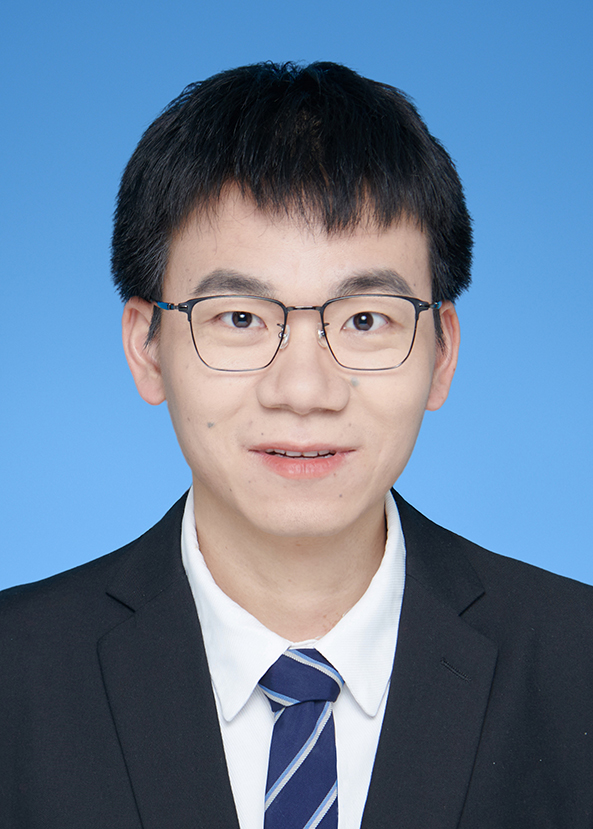
Lu Yong
Ph.D., Researcher
Yong Lu, Ph.D., Special-term Researcher, Institute of Applied Chemistry and Engineering, graduated from Nankai University.
Special Talent:National Outstanding Young Talent, Young Talent Promotion Program, China Association for Science and Technology (CAST)
Address:Room 902, Building A, United Building, Nankai University, No. 94 Weijin Road, Nankai District, Tianjin, P. R. China
Telephone:
Email:yonglu@nankai.edu.cn
Research Group Website:https://energy.nankai.edu.cn/
Research Interest:Organic Materials and Their Battery Applications, Solid-State Batteries
History:
2020 Ph.D., Nankai University
2020–2024 Postdoctoral Research, Nankai University2024–Present Distinguished Researcher, College of Chemistry, Nankai UniversityHonors and Awards
2024 National Outstanding Young Talent
2023 Young Talent Promotion Program, China Association for Science and Technology (CAST)
Scientific Achievements & Selected Publications
He has published more than 100 papers with over 10,000 citations and an H-index of 50. Among them, more than 20 papers are as first (co-first) or corresponding author, including 1 in Nature Reviews Chemistry, 1 in Accounts of Chemical Research, 4 in Journal of the American Chemical Society, 7 in Angewandte Chemie International Edition, 1 in Advanced Materials, and 1 in National Science Review.
Selected Publications in the Past Five Years:
1. Z. Yang, Y. Lu*, S. Xu, X. Liu, L. Shang, Z. Yan, K. Zhang, J. Chen*. Cathode electrolyte interphase regulation for high-performance lithium–organic batteries. J. Am. Chem. Soc. 2025, 147, 15019–15028.
2. S. Wu, X. Liu, M. Guo, J. Hou, Z. Hao, K. Zhang, H. Li, Z. Yan, Y. Lu*, J. Chen*. Anion-induced bridged electrolyte design strategy mitigates capacity decay in lithium–sulfurized polyacrylonitrile batteries. Angew. Chem. Int. Ed. 2025, 64, e202517531.
3. S. Shao, J. Hou, Y. Ni, C. Zhu, S. Wu, X. Liu, C. Wang, K. Zhang, Z. Yan, Y. Lu*, J. Chen*. Constructing robust electrode/electrolyte interphases for highly stable lithium–sulfurized polyacrylonitrile batteries. Angew. Chem. Int. Ed. 2025, 64, e202503214.
4. J. Hou, W. Xie, L. Shang, S. Wu, Y. Cui, Y. Li, Z. Yan, K. Zhang, Y. Lu*, J. Chen*. Nanocrystals with aggregate anionic structure enable ion transport decoupling of chain segment movement in poly(ethylene oxide) electrolytes. Angew. Chem. Int. Ed. 2025, 64, e202418783.
5. C. Wang, Y. Ni, C. Zhu, Y. Li, Z. Yan, Y. Lu*, J. Chen*. A highly crystalline covalent organic framework with rich redox active sites as cathode material for lithium batteries. Angew. Chem. Int. Ed. 2025, 64, e202423992.
6. Y. Lu#, Z. Yang#, Q. Zhang, W. Xie*, J. Chen*. Regulating electrostatic interaction between hydrofluoroethers and carbonyl cathodes toward highly stable lithium–organic batteries. J. Am. Chem. Soc. 2024, 146, 1100–1108.
7. Y. Lu#, Y. Ni#, J. Chen*. Reliable organic carbonyl electrode materials enabled by electrolyte and interfacial chemistry regulation. Acc. Chem. Res. 2024, 57, 375–385.
8. Y. Lu, Q. Zhang, F. Li, J. Chen*. Emerging lithiated organic cathode materials for lithium-ion full batteries. Angew. Chem. Int. Ed. 2023, 62, e202216047.
9. Y. Lu#, Y. Cai#, Q. Zhang, Y. Ni, K. Zhang, J. Chen*. Rechargeable K–CO2 batteries with a KSn anode and a carboxyl-containing carbon nanotube cathode catalyst. Angew. Chem. Int. Ed. 2021, 60, 9540–9545.
10. Y. Lu, J. Chen*. Prospects of organic electrode materials for practical lithium batteries. Nat. Rev. Chem. 2020, 4, 127–142.
Professional Cultivation
The group recruits 2 PhD candidates and 2 master’s students annually.
Students with backgrounds in organic synthesis, organic chemistry, electrochemistry, energy chemistry, materials science, and related fields are warmly welcome to join our research team.