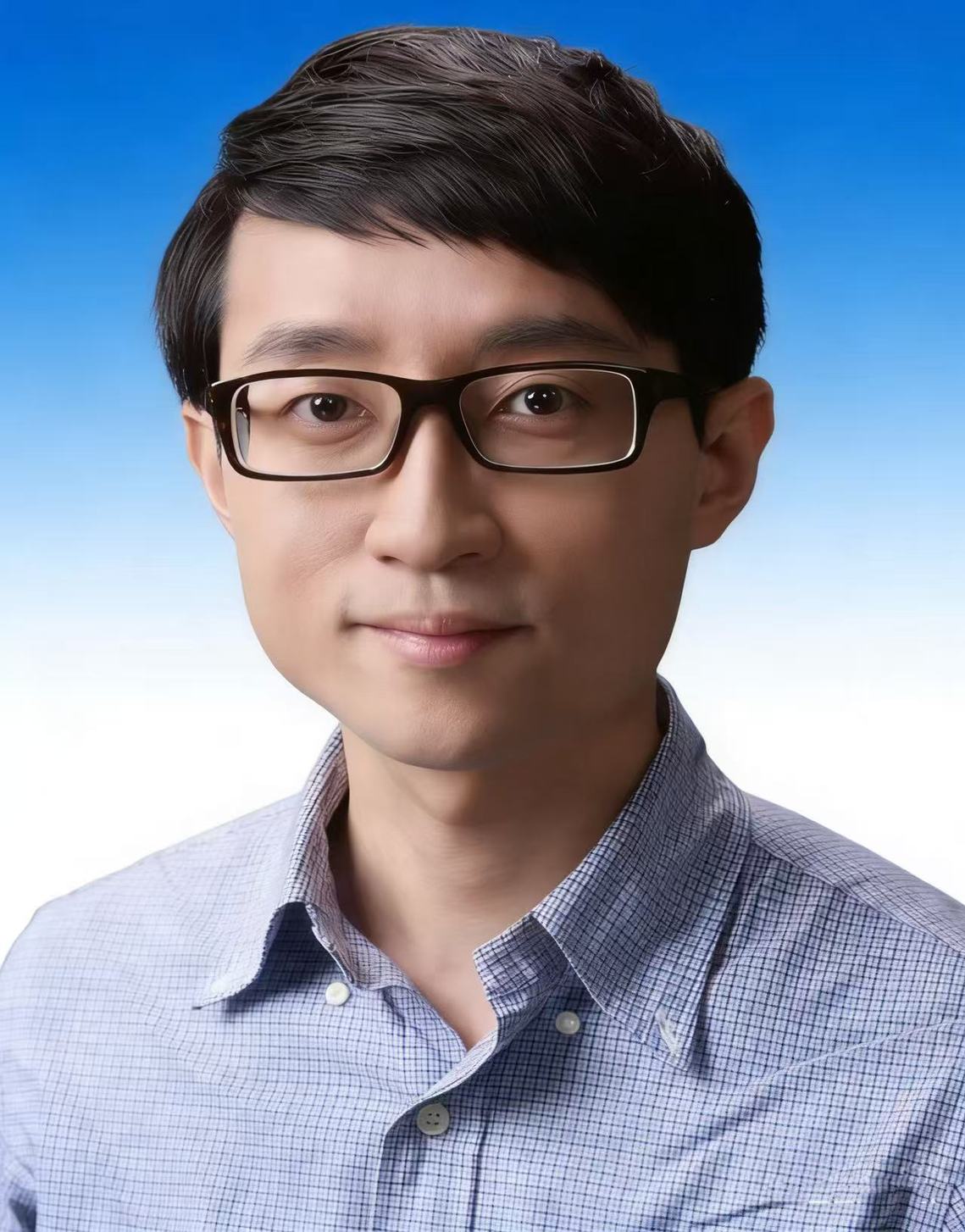
Zhiguang Yuchi, Ph.D., Professor, Institute of Elemento-organic Chemistry, graduated from McMaster University
Special Talent:Excellent Young Scientists Fund, NSFCAddress:4th Floor, Basic Science Center, Nankai University, Weijin Road #94, Tianjin, 300071, China
Telephone:
Email:yuchi@nankai.edu.cn
Research Group Website:https://www.yuchilab.com/
Research Interest:1. Mechanistic Studies of Membrane Protein Targets
Investigating the structural basis of ligand recognition, allosteric regulation, gating, and species selectivity of membrane proteins, with a particular focus on ion channels.
2. AI-Driven Design of Small Molecules and Peptides
Integrating structural biology, artificial intelligence, and high-throughput screening to enable the rational design and optimization of bioactive small molecules and peptide therapeutics.
Combining chemical synthesis, synthetic biology, and functional evaluation to develop bioactive molecules for next-generation green pesticides and innovative therapeutics.
1999-2003, BSc, School of Life Sciences, Fudan University, China
2003-2009, PhD, Department of Biochemistry and Biomedical Sciences, McMaster University, Canada
2009-2010, Postdoctoral Fellow, Cold Spring Harbor Laboratory, USA
2010-2016, Research Associate, Department of Biochemistry and Molecular Biology, University of British Columbia, Canada
2016-2021, Associate Professor, School of Pharmaceutical Science and Technology, Tianjin University, China
2021-2026, Professor/Vice Dean, School of Pharmaceutical Science and Technology, Tianjin University, China
2016-present, Adjunct Professor, Department of Biochemistry and Molecular Biology, University of British Columbia, Canada
2026-present, Professor, College of Chemistry, Nankai University, ChinaHonors and Awards
2013, Michael Smith Fellowship
2015, Michael John Page Award
2017, Excellence in Mentoring Award, American Chemical Society
2017, Young Thousand Talents Program, Tianjin
2020, Excellent Young Scientists Fund, National Natural Science Foundation of China
2023, Agricultural Chemistry Innovation Award, Chinese Chemical Society
2025, High-Level Natural Science Innovation Award, Tianjin University
2025, First Prize, Natural Science Award, the Ministry of Education of ChinaResearcherID: N-5184-2016 | ORCID: 0000-0003-2595-9106
Selected Publications:
(1) Structural insights into insect-selective sodium channel toxins drive AI-enhanced biopesticide design, Nature Communications, 2026, 17(1): 3543.
(2) Crystal structures of ryanodine receptor reveal dantrolene and azumolene interactions guiding inhibitor development, Nature Communications, 2025, 16(1): 10110.
(3) AI-driven de novo enzyme design: Strategies, applications, and future prospects. Biotechnology Advances, 2025, 82:108603.
(4) Cryo-EM structures of ryanodine receptors and diamide insecticides reveal the mechanisms of selectivity and resistance, Nature Communications, 2024, 15(1): 9056.
(5) Structural basis for directional chitin biosynthesis. Nature, 2022, 610: 402-408.
(6) Structures of PKA–phospholamban complexes reveal a mechanism of familial dilated cardiomyopathy, eLife, 2022, 11(1): 1- 21.
(7) Anaerobic hydroxyproline degradation involving C–N cleavage by a glycyl radical enzyme, Journal of the American Chemical Society, 2022, 144(22): 9715-9722.
(8) The Glycyl Radical Enzyme Arylacetate Decarboxylase from Olsenella scatoligenes. ACS Catalysis, 2021, 11, 9: 5789–5794.
(9) Structural basis for diamide modulation of ryanodine receptor, Nature Chemical Biology, 2020, 16(1): 1246-1254.
(10) Two radical-dependent mechanisms for anaerobic degradation of the globally abundant organosulfur compound dihydroxypropanesulfonate, Proc. Nati. Acad. Sci., 2020, 117(27): 15599-15608.
(11) Variation among 532 genomes unveils the origin and evolutionary history of a global insect herbivore. Nature Communications, 2020, 11: 2321.
(12) Radical-mediated C-S bond cleavage in C2 sulfonate degradation by anaerobic bacteria, Nature Communications, 2019, 10(1): 1609.
(13) Crystal structure of diamondback moth ryanodine receptor Repeat34 domain reveals insect-specific phosphorylation sites. BMC Biology, 2019, 17: 77.
(14) Crystal structures of Ryanodine Receptor SPRY1 and tandem-repeat domains reveal a critical FKBP12 binding determinant. Nature Communications, 2015, 6:7947.Professional Cultivation
Trained 6 Ph.D. students, 22 master’s students, and 3 postdoctoral fellows.