
背景介绍
苄基羧酸是一类在许多药物和生物活性分子中广泛存在的结构单元,例如布洛芬、萘普生和氟比洛芬等。由于其在合成化学中的重要性,开发高效、绿色的合成方法一直是研究热点。二氧化碳(CO2)作为一种理想的C1原料,因其丰富、易得且无毒的特性,吸引了众多研究者将其转化为高附加值的羧酸。然而,由于CO2的热力学稳定性和动力学惰性,其有效的活化和选择性转化面临巨大挑战。电化学合成因其可控性、环境友好性和成本效益而受到广泛关注,尤其是在利用CO2作为羧基源的羧化反应中。
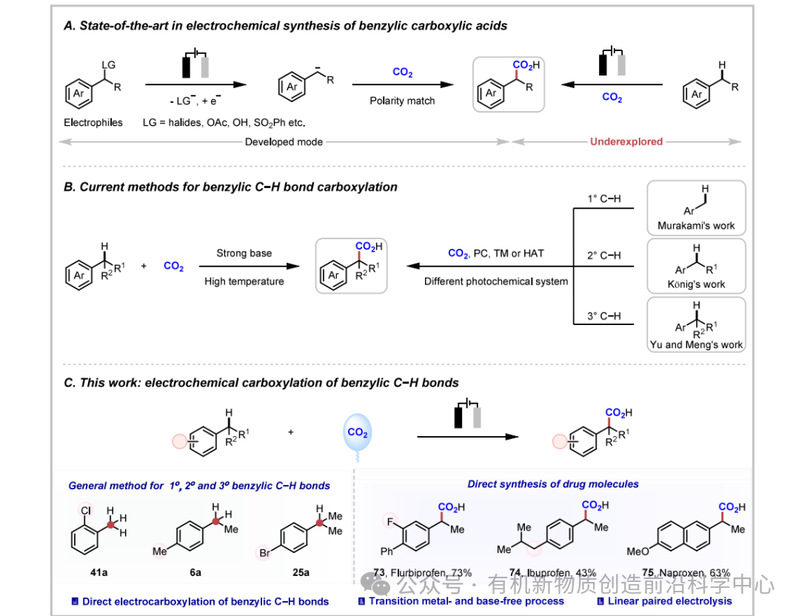
Figure 1.Synthetic approaches to benzylic carboxylic acids. A) State-of-the-art in electrochemical synthesis of benzylic carboxylic acids. B)Current methods for benzylic C−H bond carboxylation. C) This work: electrochemical carboxylation of benzylic C−H bonds.
研究思路
近日,南开大学有机新物质创造前沿科学中心仇友爱研究员课题组以“Electrochemical Benzylic C−H Carboxylation”为题在《Journal of the American Chemical Society》期刊上发表论文,南开大学有机新物质创造前沿科学中心为论文通讯单位。
本研究旨在开发一种直接的苄基C−H羧化方法,以实现从简单原料到苄基羧酸的高效转化。研究团队通过电化学手段,利用卤素原子促进的线性配对电解策略,实现了苄基C−H键的直接羧化。该方法无需使用过渡金属催化剂或强碱,具有环境友好和成本效益高的特点。
条件优化
研究团队以丁苯(1a)为模型底物,对电化学苄基C−H羧化反应的条件进行了优化。实验结果表明,在使用10 mol%的碘化钠(NaI)作为添加剂,四丁基氯化铵(nBu4NClO4)作为电解质,二氯乙烷(DCE)作为溶剂,以及在20 mA恒定电流下进行电解时,反应能够以82%的收率得到目标产物。此外,实验还发现,使用镍板作为阴极,石墨毡作为阳极时,反应效果最佳。
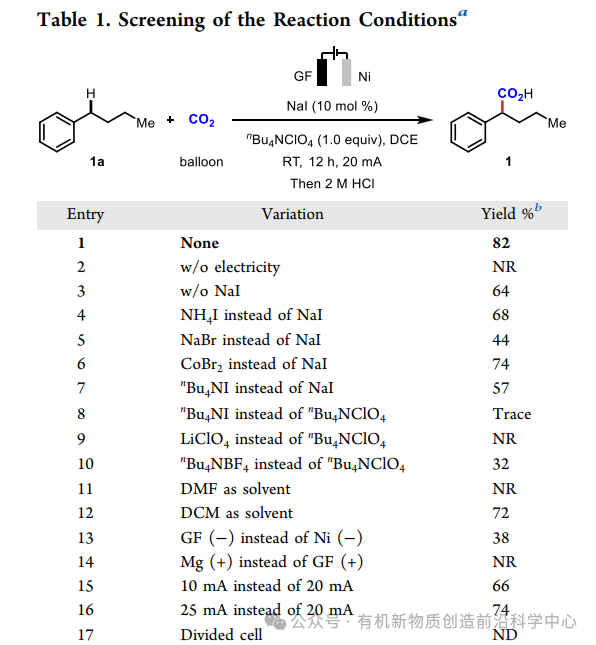
aReaction conditions: undivided cell, 1a (0.3 mmol, 1.0 equiv), CO2(balloon), NaI (0.03 mmol, 10 mol %), nBu4NClO4 (0.3 mmol, 1.0equiv), DCE (5.0 mL) under 20 mA constant current at roomtemperature for 12 h with graphite felt (GF) as the anode and nickel(Ni) plate as the cathode. bYield of isolated product. NR = noreaction. ND = not detected.
底物拓展
在优化条件下,研究团队对底物范围进行了广泛探索。结果表明,该方法能够有效合成多种一级、二级和三级苄基羧酸,且对多种官能团具有良好的耐受性,包括卤素、烯烃和酮等。此外,该方法还成功应用于药物分子的直接合成,如氟比洛芬、布洛芬和萘普生等,展示了其在合成化学中的实际应用潜力。

Figure 2.Scope of benzylic C−H bonds. Reaction conditions: asubstrate (0.3 mmol, 1.0 equiv), CO2 (balloon), NaI (0.03 mmol, 10 mol %),nBu4NClO4 (0.3 mmol, 1.0 equiv), DCE (5.0 mL) under 20 mA constant current at room temperature for 12 h with graphite felt (GF) as theanode and Ni plate as the cathode in an undivided cell. b10 mA for 5 h. c10 mA for 10 h. dUsing TMSCHN2 was used as the methylation reagent.
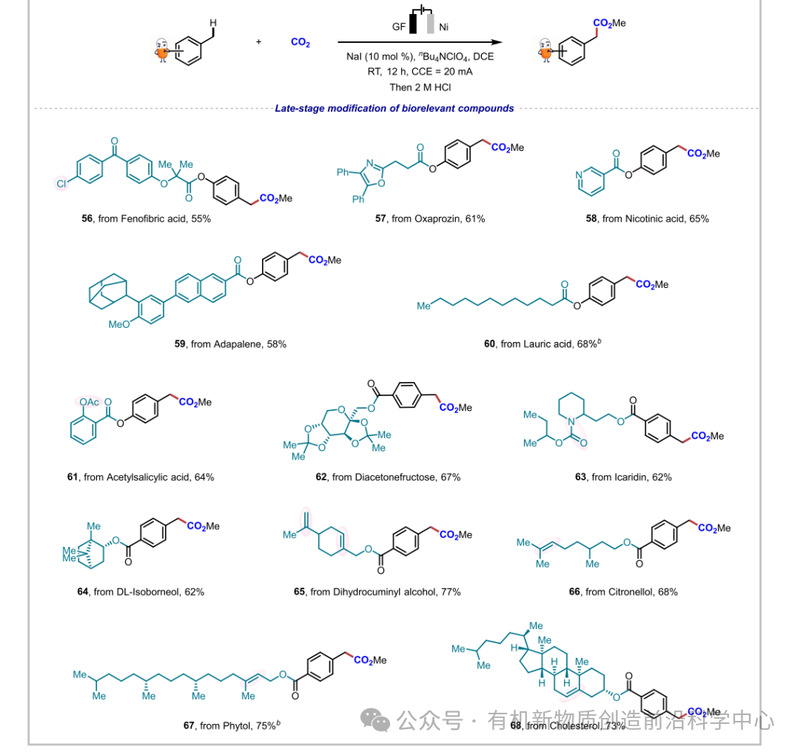 Figure 3.Late-stage modification of biorelevant compounds. Reaction conditions: asubstrate (0.3 mmol, 1.0 equiv), CO2 (balloon), NaI (0.03mmol, 10 mol %), nBu4NClO4 (0.3 mmol, 1.0 equiv), DCE (5.0 mL) under 20 mA constant current at room temperature for 12 h with graphite felt(GF) as the anode and Ni plate as the cathode in an undivided cell. Using TMSCHN2 as the methylation reagent. b10 mA for 5 h.
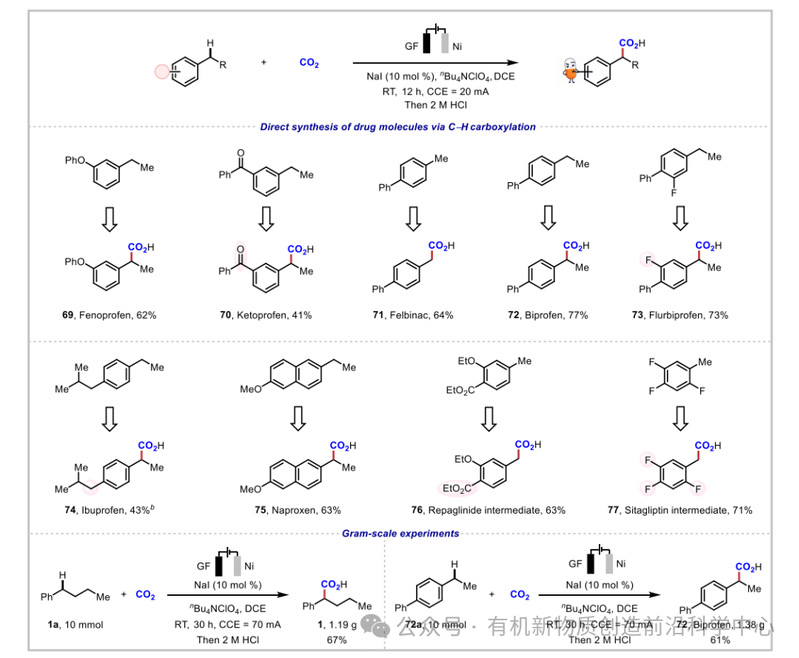
Figure 4.Direct synthesis of drug molecules and gram-scale experiments. Reaction conditions: asubstrate (0.3 mmol, 1.0 equiv), CO2 (balloon),NaI (0.03 mmol, 10 mol %), nBu4NClO4 (0.3 mmol, 1.0 equiv), DCE (5.0 mL) under 20 mA constant current at room temperature for 12 h withgraphite felt (GF) as the anode and Ni plate as the cathode in an undivided cell. b10 mA for 5 h. For gram-scale experiments: substrate (10 mmol,1.0 equiv), CO2 (balloon), NaI (1 mmol, 10 mol %), nBu4NClO4 (10 mmol, 1.0 equiv), DCE (80 mL) under 70 mA constant current at roomtemperature for 30 h with graphite felt (GF) as the anode and Ni plate as the cathode in an undivided cell.
应用研究
为了进一步验证该方法的实际应用价值,研究团队进行了克级规模的实验。在10 mmol规模下,布洛芬的合成实验成功实现了高步骤经济性和原子经济性,进一步证明了该方法的实用性和可扩展性。
机理研究
通过一系列的机理实验,研究团队提出了可能的反应机制。实验结果表明,反应过程中可能涉及自由基中间体的生成和转化。例如,自由基捕获实验表明,反应中可能生成了苄基碳自由基、氯自由基和碘自由基。此外,氘代实验结果表明,溶剂中的氢原子或氘原子可能参与了反应过程。基于这些实验结果,研究团队提出了一个可能的反应机制:DCE在阳极失去电子生成氯离子,随后氯自由基与底物发生氢原子转移生成苄基碳自由基,进一步氧化生成苄基氯,最终与CO2发生亲核加成反应生成目标产物。
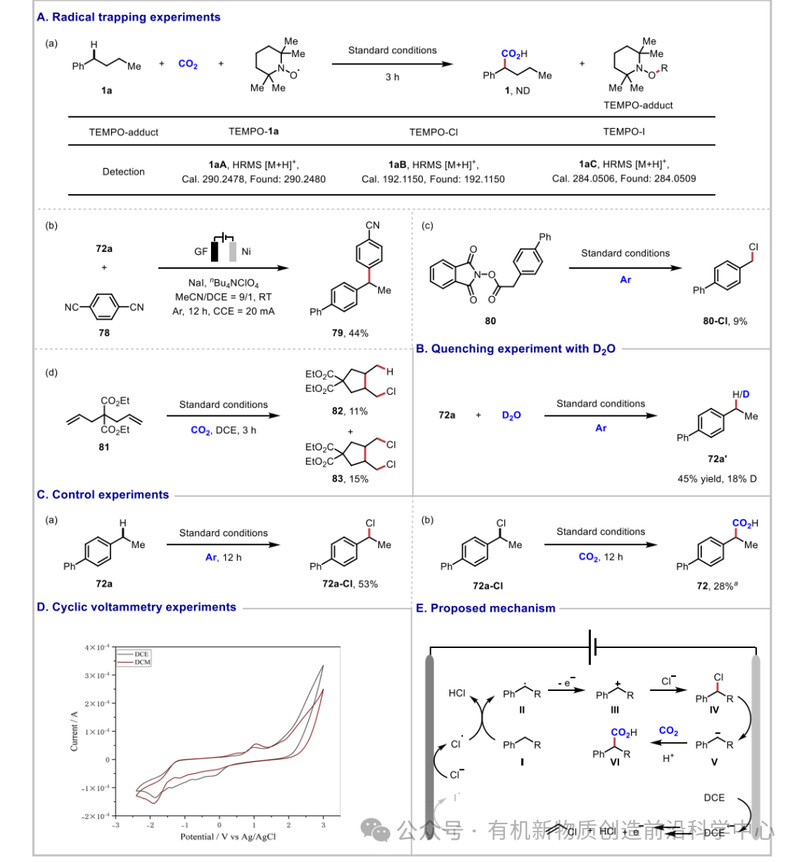
Figure 5. Mechanistic studies and proposed mechanism. A) Radical trapping experiments. B) Quenching experiment with D2O. C) Controlexperiments. a72a-Cl was recovered in 31% yield, and 72a was obtained in 35% yield. D) Cyclic voltammetry experiments. E) Proposedmechanism.
总结
本研究成功实现了电化学苄基C−H羧化反应,克服了苄基C−H键和CO2的固有惰性。该方法具有高原子利用率,能够有效构建多种苄基羧酸,并且对多种官能团具有良好的耐受性。此外,该方法无需使用过渡金属催化剂或强碱,具有环境友好和成本效益高的特点。该方法的成功为苄基羧酸及相关化合物的合成提供了新的思路,并为电化学合成领域的发展提供了新的方向。
文献信息
Weimei Zeng, Chengyi Peng, Youai Qiu, Electrochemical Benzylic C−H Carboxylation, Journal of the American Chemical Society, 10.1021/jacs.5c00259.